
Your Treatment Journey at Toronto Hearing Services
Hearing aids treatment follows a structured 5-phase journey from initial assessment to lifelong care. Toronto Hearing Services is one of the few medical audiology clinics in the Toronto area. Our medically advanced approach ensures you are medically informed and cared for on the ongoing journey—not a one-time sale.


Here’s a video that will tell you what to expect on your first visit:
Phase 1:
Medical Case History
Before your first visit to one of our audiology clinics in Toronto, you’ll complete our Medical Case History Form that evaluates your complete hearing health profile.
This audiologist-designed assessment examines hearing-related aspects including:
 Direct risk factors: Age-related hearing loss patterns, genetic predisposition, noise exposure
history, ototoxic medication use, and head trauma- Systemic health connections: Cardiovascular, metabolic, kidney, autoimmune, thyroid conditions
could be associated to hearing health - Current hearing symptoms: Communication challenges, tinnitus (ringing in the ear), and
hyperacusis (uncomfortable sensitivity to sounds) - Broader health impact: Cognitive concerns, mental health concerns, and fall risk assessment
Why it matters: Builds a holistic baseline beyond basic tests. Dive deeper into the form.

Phase 2:
Determining Stage of Hearing Loss
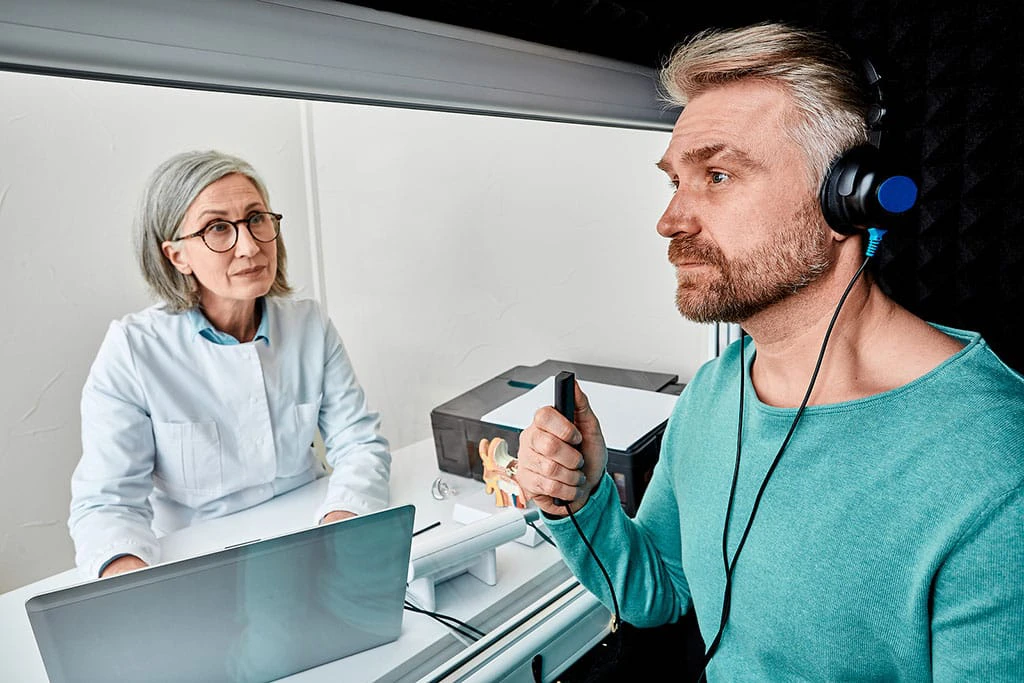
At the visit, our audiologists will perform your prescribed set of diagnostic testing, which may include standard hearing test, extended high frequency testing, speech in noise testing, and cognitive screening.
- Standard hearing testing will tell you about your hearing at conversational level. Know more
about how the test is like here. - Extended high-frequency testing will tell you about any hidden hearing loss, which is a likely
cause of tinnitus. Learn how extended high frequencies reveal hidden hearing loss. - LISN-S speech in noise testing will tell how much discount in hearing you are suffering from in
a not-so-ideal listening environment. The LISN-S test will answer these questions. - Cognivue screening will tell you about how healthy your brain is, given that untreated hearing
loss increases risks of cognitive problems such as dementia. Wondering how?
You can sign up for your hearing test here.
Phase 3:
Review your Cognitive and Audiologic Report
You’ll receive a detailed Cognitive and Audiologic Report that establishes your baseline hearing and cognitive function. This evidence-based hearing report covers:
- Comprehensive hearing test measuring frequency-specific hearing loss
- Auditory processing test for cognitive-hearing connections
- Personalized risk profile including dementia risk factors
- Intervention recommendations
This thorough hearing exam goes beyond standard hearing tests in Toronto, addressing the critical link between hearing health and brain health.
With the progressive nature of hearing loss, it is important that you start doing something for your hearing. See why beginning treatment early is important.

Phase 4:
Determining suitable medical treatment
After explaining your hearing test results and your comprehensive hearing profile, our audiologists will discuss your course of treatment with you. Things that will be discussed are:
- The medical benefits of regularly using hearing aids: regular users of hearing aids yield reduced risk of dementia, fall, and depressive episodes.
- Realistic outcomes and timelines: many cases of hearing loss are neurologically and progressively degenerative. Hearing aids can supplement your residual hearing by providing the auditory stimulation your brain requires to function properly, but there are also limitations.
- Auditory training to maximize chances of gains: If hearing aids are crutches to support your muscles, then auditory training retrains your muscles so that they can work better for you.
- Aftercare bundle: hearing aid purchase is a medical treatment that is never meant to be a one-off purchase. You require ongoing support as you gradually re-adapt to hearing clearly again.
Your hearing aid is an investment into your health. You can decide your level of investment based on the hearing aid’s technology level and your communication needs. Read Toronto Hearing Services’ guide to hearing aid purchase here.
Phase 5:
Treatment Begins
We expect to begin treatment on Day 1, which includes:
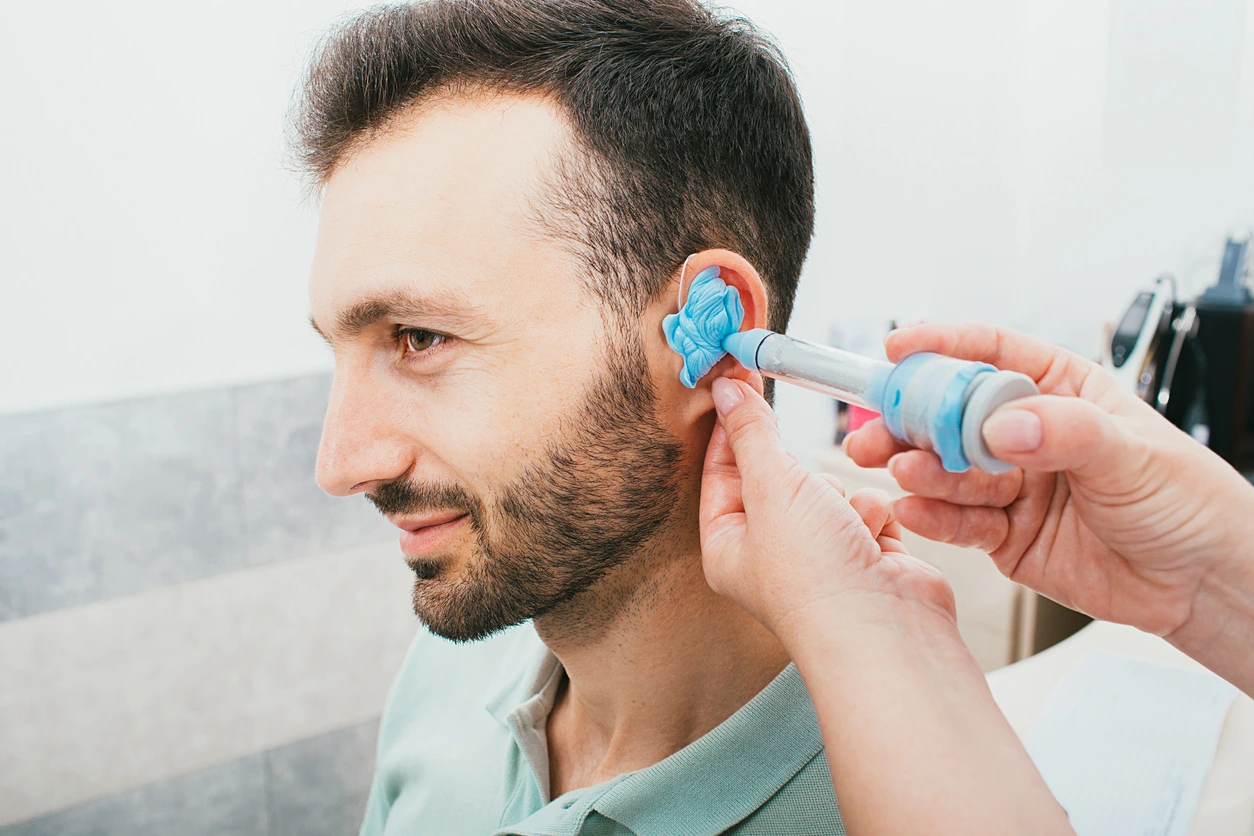
- Professional fitting and programming of hearing devices
- Auditory training onboarding
- Communication strategies for you and your family
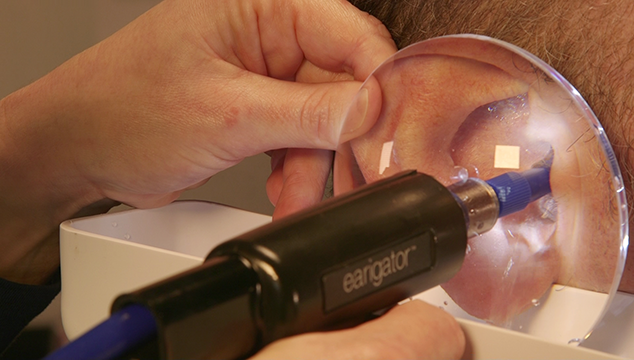
You’ll also be introduced to our After-care Bundle:
- Proactive monitoring of hearing changes with comprehensive testing
- Auditory training progress tracking
- Adjust hearing aids for optimal performance
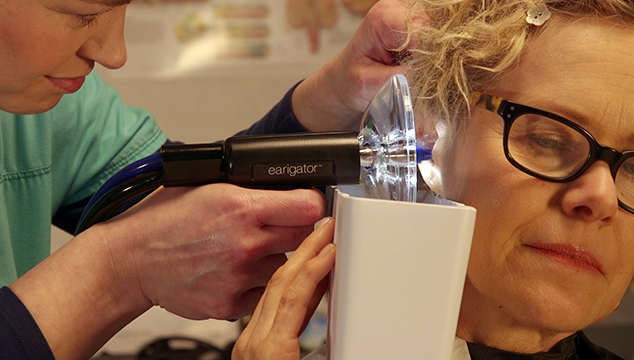
- Hearing aid repairs and maintenance as needed
Know what your after care bundle includes here.
No Treatment Lasts Forever.
Your hearing might change, and technology improves to give you a better experience or greater support in different listening environments. In this short, 11-minute, online seminar Dr. Keith N. Darrow, PhD, explains how hearing deteriorates and treatments improve.
Step By Step Procedure
What to Expect on Your First Visit

01
Get to Know You & Understand Your Symptoms
Get to Know You & Understand Your Symptoms



02
Discuss Your Treatment Goals & Medical History
Discuss Your Treatment Goals & Medical History


03
Determine Your Stage of Hearing Loss/Tinnitus
Determine Your Stage of Hearing Loss/Tinnitus




04
Answer All of Your Questions or Concerns
Answer All of Your Questions or Concerns


05
Begin a Custom Treatment Plan
Begin a Custom Treatment Plan

CUSTOM TREATMENT PLAN
Begin Your Treatment Today
Don’t wait to take the next step toward better hearing and a better quality of life. Whether you’re looking to address hearing problems or book a hearing test, our clinics across Toronto are here to support you.
From testing to treatment, our team will guide you through every step. Whether you’re just starting to notice changes or have been managing hearing loss for a while, we’re ready to help you find the right solution.
Schedule your consultation today and take the first step toward better hearing and a more connected living.
Request Your Consultation
*Please first request a referral from your doctor to have your hearing test covered by OHIP*
Toronto Hearing Services Locations
The Audiology Centre (North York)
Business Hours:
Mon–Thurs: 8:00 am – 4:30 pm
Friday: 8:00 am – 1:00 pm
Phone: (416) 498–4151
FAX:
416–498–1589
Markham Stouffville Hearing Services
Business Hours:
Mon–Thurs: 8:00 am – 5:00 pm
Friday: 8:00 am – 1:30 pm
Phone: (905) 471-4327
FAX:
905-471-4338
West End Hearing Services
Business Hours:
Tue–Thurs: 8:00 am – 4:30 pm
Mon & Fri: Closed
Phone: (416) 233-8581
FAX:
416-233-4390





Frequently Asked Questions
What makes Toronto Hearing Services different from a regular hearing aid store?
Toronto Hearing Services is a medical audiology clinic that prioritizes diagnosis, risk profiling, and long-term management rather than one-time device sales, integrating hearing and cognitive health in every phase of care.
What happens before my first in‑clinic appointment?
Before you arrive, you complete a Medical Case History Form that reviews risk factors, systemic health conditions, current hearing symptoms, and broader issues like cognition, mood, and fall risk.
What types of tests are done to determine my stage of hearing loss?
Depending on your needs, testing may include standard hearing tests, extended high‑frequency testing, LISN‑S speech-in-noise assessment, and Cognivue cognitive screening to understand both hearing and brain function.
What is included in the Cognitive and Audiologic Report?
The report summarizes your frequency‑specific hearing loss, auditory processing, dementia‑related risk factors, and individualized intervention recommendations, giving you a clear baseline for future comparison.
When does treatment actually start, and what does it involve?
Treatment typically begins on Day 1 with professional fitting and programming of devices, auditory training onboarding, communication strategies, and introduction to the After Care Bundle for ongoing adjustments and maintenance.